 News
News
DAFNI announces 2026 Fellows cohort
Updated on June 11 2026
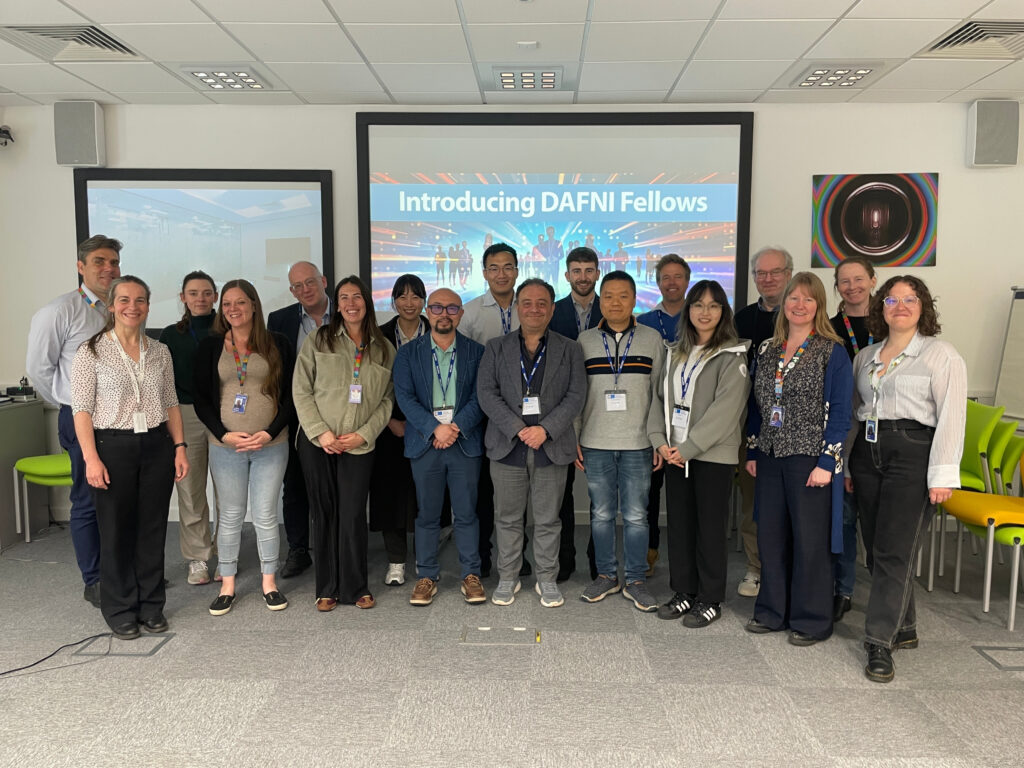
Congratulations to our 10 new DAFNI Fellows, selected from 116 applicants!
This is a nationally competitive fellowship which focuses on infrastructure resilience, interdisciplinary research, and engagement across academia, government, and industry and offers the dual benefit of funding and an exciting opportunity for successful applicants to further their research and careers in infrastructure.
Research topics range from the latest AI techniques to compound hazards, extreme weather and best practice for improved decision-making.
Each DAFNI Fellow has been awarded £10,000 to support staff time, travel, knowledge exchange, conferences, and dissemination activities. The funds also support networking across government, industry & academia; building valuable networks by collaborating with influential stakeholders during workshops, conferences, and community engagement activities.
Brian Matthews, DAFNI Leader, says, “Our new DAFNI Fellows initiative represents the dual benefit of funding and an exciting opportunity for successful applicants to further their research and careers in infrastructure. The fellowship scheme will help further the aims of the Centre of Excellence, identifying research approaches to the challenges of safeguarding the security and resilience of national infrastructure. In addition, we operate a ‘once a DAFNI Fellow, always a DAFNI Fellow initiative’, ensuring strong connections for the future.”
DAFNI Fellows applications were assessed by a senior academic panel against the programme’s high level programme goals ‘Fostering collaboration (20%), Bridging the Gap between Government, Academia and Industry (20%), DAFNI Innovation (20%), Growing knowledge within the Centre of Excellence (20%) and Sustainable Research (20%).
Successful applicants range from Research Associates and Lecturers to Readers and Professors, showcasing a full range of career stages.
Fellows will receive training and guidance from the DAFNI team to integrate their data, models, and research outputs into the DAFNI platform for long-term accessibility and reuse.
Skills development & leadership opportunities will also be evidenced as Fellows will contribute to workshops, white papers, reports, and the annual DAFNI conference – building leadership, communication and technical skills.
The DAFNI Fellows starting their term from 1st of April 2026 to 30th of June 2027 are:
- Ms Ji-Eun Byun, Lecturer in System Risk & Resilience, University of College London – a resilient digital twin for transport networks
- Mr Xiaohui Chen, Associate Professor in Civil and Environmental Engineering at the University of Leeds –next-generation AI-for-Science frameworks that integrate physical modelling and data-driven approaches to support national infrastructure resilience
- Ms Yitian Dai, Post-Doctoral Research Associate at The University of Manchester – climate resilient electricity networks on DAFNI and cascading failure analysis
- Ms Amy Green, Research Associate at Newcastle University – focus on addressing key challenges in the quality, accessibility and interoperability of climate data, particularly on extreme rainfall
- Mr Manuel Herrera, Lecturer (Assistant Professor) in Hydrology at Newcastle University – trustworthy AI for infrastructure, lessons from flood management
- Ms Qiuchen Lu, Professor at The Bartlett School of Sustainable Construction, University College London (UCL) – focus on building on the IMPACT project, developing an integrated road-sewer-human digital twin
- Mr Thomas (Tom) Mansfield, Data Systems Architect at Plymouth Marine Laboratory – a structured analysis of federated data-architecture approaches across UK offshore-wind programmes.
- Mr James McKenna, Research Associate in Hydrodynamic Modelling at Newcastle University – optimising risk management in urban flood resilience
- Mr Khuong Nguyen, Associate Professor of Smart Transport at Royal Holloway University of London – Reliable AI Modelling for Railway Disruption – how to model uncertainty in compound rail disruptions
- Mr Mingshu Wang, Reader in Geospatial Data Science at the University of Glasgow – GeoAI-enabled workflows for decision-ready infrastructure evidence
Visit our dedicated Fellows page here!