 Case studies
ForNET: Considering human behaviour in forecasting energy consumption
Introduction
The lack of consideration for human behaviour is critical gap in current energy demand forecasting models. When assessing a household’s energy demand, researchers’ assumptions are traditionally based on cyclical patterns that follow the hours of the day, days of the week, and months of the year. These are underpinned by a variety of factors, such as seasonal temperature differences.
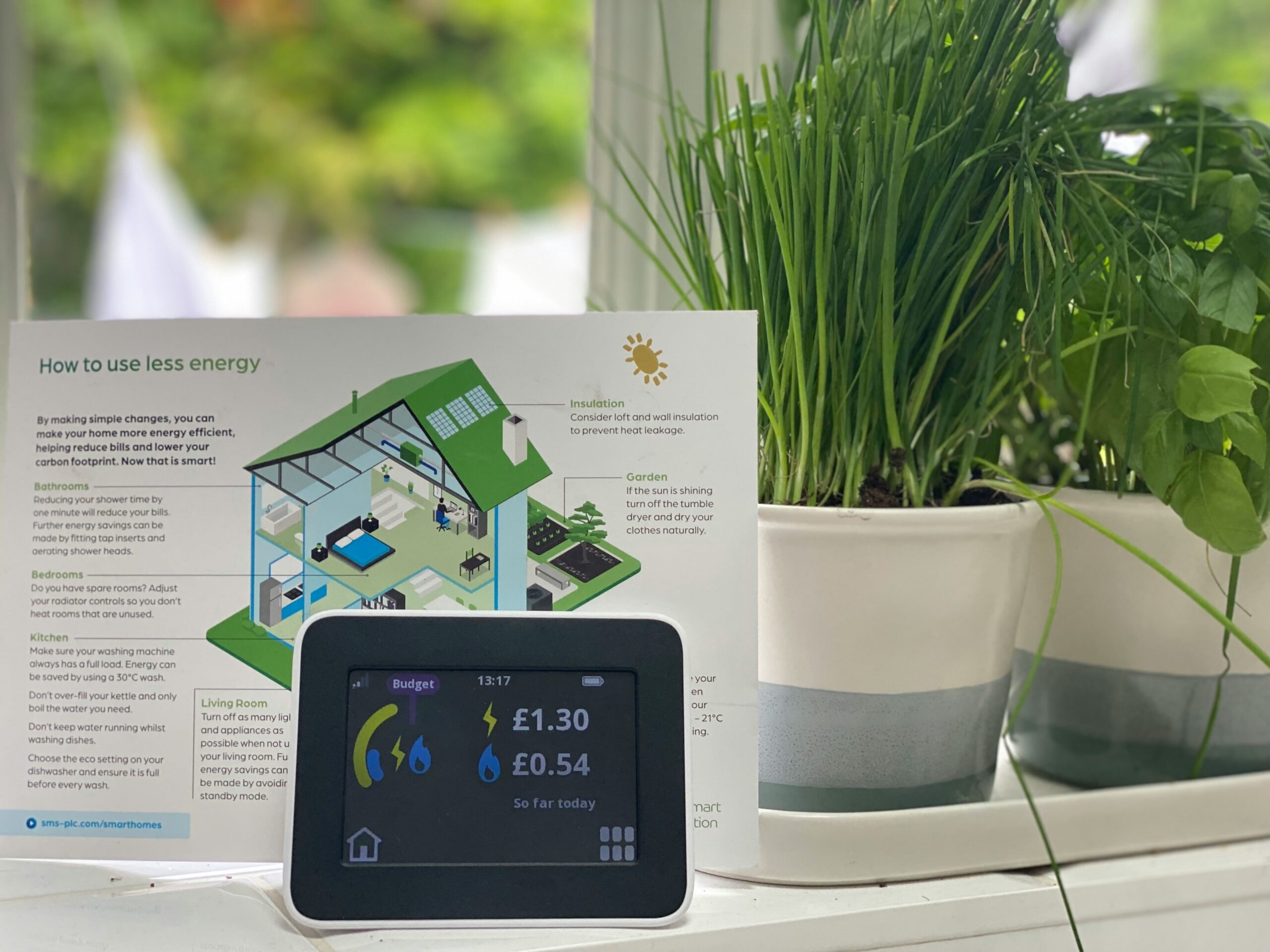
When major changes happen, such as when a young adult leaves home, a reduction in energy consumption will usually become apparent. Previously, it could take three to six months for energy data to demonstrate such a decrease, but now smart meters indicate such changes almost immediately.
If models could manage to efficiently identify new and emerging patterns of usage, the resulting data could better forecast and accurately manage a household’s needs. The ForNET (FORecasting Services for Energy NETworks) project seeks to capture this data.
What would you identify as the main impact of the work?
Within ForNET, an innovative approach that combines behavioural and statistical elements for forecasting energy consumption has led to greater predictive accuracy and improved modelling. From a practitioner’s perspective, the impact lies in creating a platform that enables companies or local authorities to assess how new legislation or initiatives could affect energy consumption in a particular area. Energy providers can also experiment with how changes to their tariffs affect energy consumption and use the data to inform future decision-making.
Key challenges that ForNET seeks to solve
The ForNET team set out to address two key challenges: the impact of extreme events, and the impact of behavioural elements on energy usage.
Severe weather affects household energy consumption, and energy companies’ pricing and may lead people to alter their behaviour. For instance, if energy prices increase, people may go into the office more frequently, or work in coffee shops to avoid using energy at home during the day.
Weather and other factors that may affect people’s behaviour, such as legislation, conflict, and age, have typically not been included in forecasts of household energy use. The ForNET team were keen to explore these new themes and investigate their effects.
What were the key aims of the project?
By integrating insights from behavioural science into quantitative and judgemental forecasting methods, ForNET aimed to develop more nuanced and accurate models that better reflect real-world energy-use patterns. This involved a multifaceted methodology that included collecting and analysing data on energy consumption, renewable energy adoption, and weather conditions, as well as behavioural data.
What did the project involve?
The team used a public dataset from the Energy Systems Catapult, analysing data from 36 houses in the United Kingdom over July, August, September, and October in 2021 and 2022. Unable to determine the houses’ exact locations from the available data, the team relied on weather data for the entire country. By including nine different events that can change the behaviour of people, from tariff changes to COVID lockdowns, the team found that they could forecast the consumption in these 36-six houses with greater accuracy than previously.
They ran three different scenarios – one using data from 2021 to see how accurate they could make predictions when looking at 2022. The second involved gathering the data for both years together, then using the first 80% of the data to forecast the last 20%. The third scenario involved using the data from 30 of the houses to try and forecast the energy usage of the remaining six.
“Conceptually, this like having six new residents arriving in a neighbourhood of 30 people and are trying to predict how these six additional residents will behave,” explained Professor Konstantinos (Kostas) Nikolopoulos, Director of the IHRR Forecasting Laboratory and Co-Director of the Centre from the Summit of Institute Hazard Risk and Resilience at Durham University.
What outputs from the project will be shared?
DAFNI supported the team by enhancing data gathered from the 36 houses that was already in the public domain and combining it with behavioural and weather data. They then created a second dataset of 100 houses based on the parameters of the 36. These datasets incorporated all three elements: behavioural, weather, and actual consumption. The workflows used Python, running different scenarios based on the datasets and the model is available on the platform. Alongside this case study, another has been prepared to show how the workflow can be implemented in a small town, village, or area within a certain development.
How do you anticipate other researchers and policy makers using this work in the future?
There is an immediate use-case for companies that provide electricity or gas, to assess how different events may affect residents’ behaviour. The consumption can be obtained from smart meters, and weather data from the Met Office. The companies can then use ForNET’s models on DAFNI to determine how events that affect people’s behaviour alter their energy usage. These useful tools can provide companies with deeper understanding of their data, and potential answers as to what could happen in the future.
How could this work benefit society as a whole?
A microtool has been created that examines specific small factors on a household level that can help providers give better customer service, saving on both costs and energy. It is possible to run many different scenarios which can then be used to confirm issues that affect all of society at a household scale.
“We wanted an organised environment where data and software for services can be uploaded that people can use in the future,” says Professor Nikolopoulos. “DAFNI gave us a platform that people can access and use easily. It is a very good environment to experiment with small projects. Now that we have proved our project works, we can try and scale up with more partners and sponsors.”
What are your next steps?
The immediate next step is to publicise the tool to attract collaborations and new users. Durham University has strong connections with both the Office for National Statistics and the National Grid. The team will contact energy providers, including Octopus, Ovo, and British Gas. With the potential of obtaining consumption data from these leading providers, together with supply and demand data from the National Grid, and past behavioural data from the Office of National Statistics at their fingertips, the team could extend their research and increase the scale of the platform. They also wish to incorporate additional characteristics beyond weather and behavioural events into the model, such as houses that generate their own energy using solar panels.
“I have to say, I find the idea that you can use the energy data of houses in a certain area to predict the energy consumption of new residents really wonderful,” enthused Professor Nikolopoulos. “Even the idea that we have developed new ways to create forecasting is interesting in itself!”
Who’s involved?
Professor Konstantinos (Kostas) Nikolopoulos, Director of the IHRR Forecasting Laboratory and Co-Director of the Centre from the Summit of Institute Hazard Risk and Resilience at Durham University; Dr Yang Lu, Associate Professor at York St John University during this research, now Senior Lecturer at Loughborough University; Dr Haoran Zhang, Researcher at University College London and later at Imperial College London; Dr Vasileios Bougioukos (Research Associate at IHRR Forecasting Laboratory at Durham University and Adjunct Associate Professor at Notre Dame London during this research) now Associate Professor in Economics at Richmond American University London; and two external collaborators Dr Evangelos Theodorou and Mr Konstantinos Soiledis, IHRR Forecasting Laboratory, Durham University.
When did the project start and finish?
The project started in May 2024 and completed in February 2025.